Thursday, 16 October 2014

China's Alibaba renames Alipay unit in financial services push

Chinese e-commerce firm Alibaba Group Holding Ltd said on Thursday it has changed the name of its Alipay financial services unit to Ant Financial Services Group as it steps up its push into the financial services industry.


Alibaba, the world's largest e-commerce company, already processes roughly half of China's e-commerce transactions through the unit. The company has been aggressively offering new financial services around Alipay, including a money market fund for consumers, a mobile payment app and even a new private bank that was recently approved by the Chinese government. 

Delhi HC stays CCI's Rs 1-crore fine on Google

The Delhi High Court today stayed an order of the Competition Commission of India (CCI) imposing a penalty of Rs 1 crore on US-based Google for allegedly failing to provide information in a probe into its alleged unfair trade practices in India.


A bench of Justice Vibhu Bakhru also issued a notice to the CCI on the plea of the internet major and asked the panel to file its counter affidavit within four weeks.

The court also restrained the CCI from disclosing the confidential information related to the Google.

"Prima facie, we are of the view that whatever information the petitioner (Google) considers confidential shall not be disclosed," it said.

However, the court, for the time being, did not stay the ongoing probe against Google.

The court's direction came on a plea moved by Google which has alleged the CCI has 'wrongly' imposed a fine of Rs 1 crore on it and it was not heard before the order was passed by the panel.

Google has also said the order was a 'complete abuse' of authority by the CCI.

However, the CCI opposed the claim of the internet major that it was not heard saying the panel had accorded a 'through' hearing.

During the hearing, the court said "it is true that this (CCI) order contains something which is not correct."

The case before the CCI relates to the allegations that Google has been abusing its 'dominant position' in the internet search engine space.

It was also alleged that Google provides a number of vertical search services like YouTube, Google News, Google Maps etc and in order to promote its vertical search services, it mixes many of vertical results into organic search results.

The effect of such manipulation of results was that Google's vertical search partners will appear predominantly when an internet user searches for some information irrespective of whether the search results are most popular or relevant, said the allegations before the CCI.  

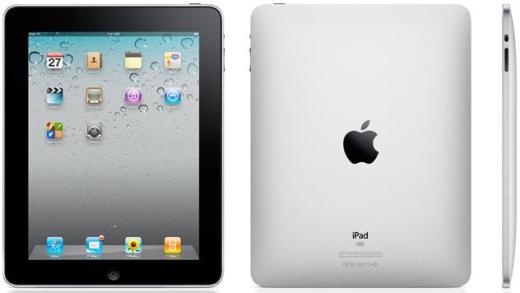
Apple set to unveil new iPads, as rivals are gaining ground

 Consumers around the world seem to have an endless appetite for new versions of Apple's iPhone. But that hearty taste hasn't extended lately to the company's other big i-product, the iPad.

After four years of dominating sales, the iPad is slipping against its peers. It is still the most popular tablet computer, but it faces tougher competition from tablets made by Amazon, Samsung and Lenovo.


Can an upgrade reverse that trend?

During an event at its Cupertino, California, headquarters on Thursday, Apple is set to unveil new iPads that are expected to include fingerprint sensors for each model. A major revision of the full-size tablet, the iPad Air, is also expected.

The new Air, which is Apple's larger and more expensive tablet, will be much thinner and faster than the current one, according to an Apple employee who spoke on the condition of anonymity because the plans were not yet official.

The new iPads are also expected to include support for Apple Pay, the mobile payments system that Apple introduced last month for making purchases using the fingerprint sensor inside apps, rather than having to enter a credit card number. And for those looking for a new color, gold iPads will be added to the mix.

Apple may have leaked some of its own news on Wednesday. An iPad instruction manual, written by Apple, surfaced on iBooks, Apple's digital bookstore, with illustrations showing a new iPad Air and an iPad Mini including fingerprint sensors and improved cameras. An Apple spokeswoman did not respond to a request for comment.

The iPad now has a 26.9% share of the global market, ahead of Samsung with 17.2% and Lenovo with 4.9%, according to the research firm IDC. But in the second quarter, Apple's iPad sales declined 9.3% compared with the same period a year ago, IDC said.

Part of the reason is that consumer interest in this kind of device — from any manufacturer — may also be waning. Shipments of tablets skyrocketed from 18 million in 2010 to 207 million last year, according to the industry analysis firm Gartner. But this year, Gartner predicts tablet shipments worldwide will be up 11 percent, a significant drop from a 55% increase in 2013.

"There were a certain number of people that were excited about tablets for a while," said Mika Kitagawa, an analyst for Gartner. "But it turned out that tablets after all are not really a great product for some things, especially productivity and work. So some people actually go back to the laptop."

Theories abound as to why sales of the iPad, in particular, are slowing. Mostly, though, Apple faces intense competition from companies offering tablets for lower costs. Some, like those sold by Micromax in India, cost as little as $50; Amazon's Kindle Fire can be had for as little as $100. Samsung Electronics offers tablets in different screen sizes at various prices, from the middle tier to the high end.

The cheaper tablets are "not really a comparison with iPad, but for those people who just want to do content consumption, those are good enough products," Kitagawa said.

Another trend hurting overall tablet sales, analysts say, is that smartphone screens just keep getting bigger. Big-screen phones, or so-called phablets — a blurring of the line between a phone and a tablet — appear to be eating away at sales of smaller tablets.

"When an opportunity arises to collapse a couple of categories together, that's attractive," said Jan Dawson, an independent telecom analyst for Jackdaw Research. "Some people who use a phablet will end up deciding to forgo a tablet, seeing one device as enough."

And for years, while tablet sales were on the rise, personal computers were taking a beating. But that started to change for some PC makers in the third quarter.

PC shipments over the last quarter fell roughly 1%, a notable improvement from the 10 percent drop in 2013. Analysts said businesses were buying PCs again partly because Microsoft discontinued support for an older version of Windows, called XP, which pushed many businesses to upgrade to new systems.

At the Cupertino event, Apple is also expected to show a new iMac with a sharper screen, and to give a release date for the next Mac operating system, OS X Yosemite, the Apple employee said.

Some moves Apple is making in the background could be even more important for the iPad than upgrades. In July, Apple announced a partnership with IBM to strengthen iPads and iPhones for use in businesses. The companies said they are working on more than 100 business software programs tailored for use in industries including retailing, health care, transportation, banking, insurance and telecommunications.

Shiny new iPads may sound more alluring, but improving business interest in the iPad is important to Apple. Chris Hazelton, a research director for 451 Research, said that among businesses, interest in using tablets has stagnated. In May, the company surveyed about 1,500 people involved with information technology spending in their companies, and found that 26% of respondents were planning to buy tablets for their organizations; that figure was also 26% in May 2013.

The partnership with IBM will probably accelerate development of apps for business use, beyond email and calendars. That could give businesses more incentive to buy large numbers of iPads for their employees, Hazelton said.

"The next kind of stage of innovation in this market is really going to be software-driven," Hazelton said. He added that banks and government agencies could make good use of Apple's fingerprint sensor as an extra security feature for gaining access to confidential materials inside iPad apps.

Inside Apple, another project aimed at professionals is an iPad with a jumbo screen, according to two employees who spoke on condition they not be named because the product is not yet finished, nor is it considered official yet.

In a recent interview about Apple's partnership with IBM, Timothy D. Cook, Apple's chief executive, acknowledged that while iPads and iPhones were used by over 92% of the Fortune Global 500 companies, there was still a vast, untapped market among other companies.

"The penetration is low, and the ceiling is so far above us it's unbelievable," Cook said. 

Android 5.0 Lollipop OS: 10 key features of Google’s latest mobile OS


Android L is finally here – and it’s not Key Lime Pie or Licorice. Google has named it “Lollipop”, keeping up with it’s dessert-name trend. The new Android 5.0 Lollipop operating system has landed first on the latest Nexus devices – Nexus 6, Nexus 9 and Nexus Player.
Android chief Sundar Pichai had earlier said this is the largest and most ambitious release on Android to date.



Here are best features announced in the latest Android OS:

1. Pick up where you left off: Similar to Continuity in iOS 8, Lollipop lets you pick up where you left off, so the songs, photos, apps, and even recent searches from one of your Android devices can be immediately accessed across devices.
2. Multiple device compatibility: Lollipop will support devices with different screen sizes including wearables such as smartwatches, TVs and cars. According to Google, it is designed to be flexible, so that it can work on all your devices and customised for your needs.
3. Material Design: In order to maintain a consistent design experience across all Android devices, Lollipop uses the Material Design interface across devices it runs on.With Material Design, elements can dynamically shrink and expand, there’s more white space between elements, and gives a 3D appearance overall. While we are yet to try it out ourselves, Google claims that the new design is more intuitive and transitions between tasks are more fluid.
4. Updated camera: Lollipop makes it easier to support features like burst mode and fine settings tuning. You’ll be able to capture full resolution frames around 30fps, and shoot in raw formats like YUV and Bayer RAW. There’s also support for UHD 4K video playback, tunneled video for high quality video playback on Android TV and improved streaming. Lollipop adds professional features to control settings for the sensor, lens and flash per individual frame.
5. Battery settings: There’s a new battery-saver feature that extends the life of your device by up to 90 minutes—helpful if you’re far from a power outlet. It’s also easier to manage your power usage. The OS adds a feature which gives the estimated time left before you need to charge and, when it’s charging, it tells you approximately how much time it will need to charge before it’s ready to go.
6. Improved security: Share your device securely with guest user mode, create multiple user accounts to enable friends to log in on your device. In either case, no one will be able to access your private files. There’s Android Smart Lock to secure your phone or tablet by pairing it with a trusted device like your wearable or even your car. Google has enforced the SELinux security module for all apps to give better protection against vulnerabilities and malware.
7. Updated notifications screen: You can now view and respond to messages directly from your lock screen, or hide notifications for sensitive content. Turning on Priority mode through your device’s volume button will allow only certain people and notifications get through.You can also choose to avoid calls from interrupting the game you are playing or the movie you are watching.
8. New Quick Settings: The updated Quick Settings on the notification screen has new handy controls such as flashlight, hotspot, screen rotation and cast screen controls. While these settings were not on older stock-Android devices, they may already be present on other customised Android devices. Similarly, you can manually adjust the brightness for certain conditions, while adaptive brightness will kick in based on ambient lighting.
9. Smoother experience: Google uses a new runtime on Android (called ART), which claims to improve app performance, battery life and responsiveness. Google claims that the new OS improves Android’s performance by four times. It compacts background apps and services so you can do more at once. There’s also support for 64-bit chips now.
10 Tap and Go: Tap and Go for NFC devices lets you set up your new Android phone or tablet instantly by simply tapping it to your old one. Whenever you get a new Android phone or tablet, you can sync your apps from Google Play automatically from any of your old Android devices.
As with all OS updates, there are minor improvements on the camera, video and audio experience, along with better multitasking, performance and battery life. Overall, Lollipop will provide a smoother user experience, more usable apps and services and help you manage bloatware. Google has also announced it will re-enable microSD card writing support and segmentation of firmware for older devices.